Thursday, November 11, 2010

Meeting Norman

A week before we set out on our Dude Ranch Road Trip, Richard and I watched City Slickers. It's a fun film starring and co-written by Billy Chrystal about three middle-aged men who go on a cattle drive from New Mexico to Colorado and "find themselves". Sadly, it's a bit too crude in places to be a suitable family film, but there are some great lines in it.

For example:

City Slicker One: We're doing great, guys! We're driving them!
City Slicker Two: Ah, that's perfect! We're lost but we're making good time!

Or, after a leather-tough cowboy dies, someone says, "The man ate bacon at every meal... You can't do that!"

Or, my favorite: "Hello boys. I thought I'd mosey on over here. You know, I've never mosied before..."

There is also a great cow in it. Halfway through the drive, Billy Crystal's character, Mitch, has to help a cow give birth. ("This was NOT in the brochure" and later: "Hey! I made a cow!") Although a puppet calf was used for the scene, the scene of a newborn getting to his feet is real. And when the newborn is cleaned up, it's the cutest calf you've ever seen. He has a caramel colored hide and big, liquid, chocolate-brown, long-lashed eyes. Billy Crystal christens him "Norman" and becomes his surrogate parent. At the climax of the film, Mitch risks his life to save Norman. He even takes the cute calf back to New York. Heck, Norman even appears in City Slickers 2!

When we visit the Skywalk at the Grand Canyon, our ticket includes a shuttle to Guano Point, which is also spectacular - and to Hualapi Ranch. You can actually stay in cabins at this ranch and go for horse rides right along the Western rim of the Grand Canyon.

When we get to the ranch on Sunday lunchtime, it is almost deserted. Two "gunslingers" are hanging around, waiting for enough people to justify a little gunplay. I get talking to one called Steve and he tells me there was a famous movie star living here at the ranch. "Only he's retired now," says Steve.  "He's quite old, nearly 18."

"Who is he?" I ask, excited. I love movies.

"Did you ever see the film City Slickers?" asks Steve. "Do you remember Norman the steer, who's born on the cattle drive?"

Norman! Norman the cute calf, now all grown up and still beautiful is here on Indian land!

Steve takes me to see him in his private pen. Norman is napping. He looks contented and just as beautiful in old age as he was as a calf.

If you ever get a chance to visit the Grand Canyon West Rim, be sure to mosey on by Norman's pen and say "Howdy!"

Saving Burros

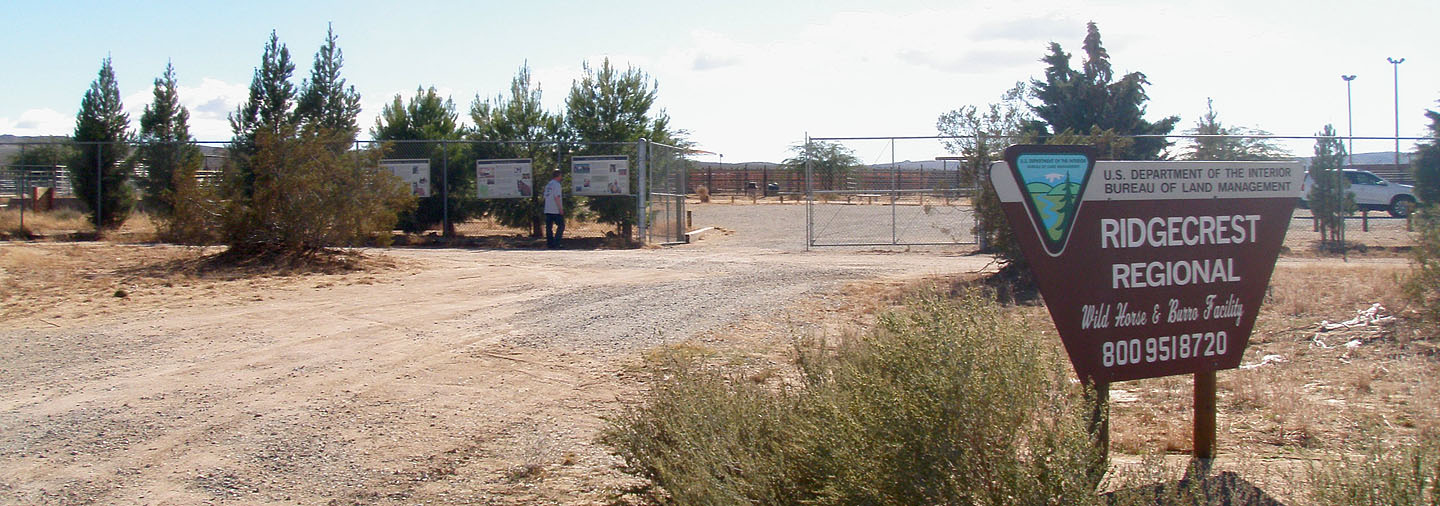
"Burros are smarter than horses," says Art DiGrazia of the Happy Trails Wild Horse & Burro Refuge in Ridgecrest, California. "They always know where to find water in the desert, if there is water to be found."

Jennifer, Richard and I left Death Valley at 10.30am this morning. We drove south along the foot of the Panamint Mountains and out past Trona where there is a Borax works still in operation today. As we pass the navy airfield of China Lake, Jennifer spots a sign with the word "burros".

We follow the sign and come to one of the biggest burro refuges in the world. In the last century 49ers went to Death Valley hoping to strike it rich. Many brought their burros. But lots of those prospectors left a few years later - deeply dejected - and didn't bother to bring their burros out; they simply abandoned them. Over the past century a huge feral burro population has grown up in Death Valley as well as other parts of the USA. There are also wild mustangs running wild. The horses and burros have no natural predator and for this very reason they can become too numerous and suffer in the wild.


Art DiGrazia has been helping rescue burros and wild mustangs for nearly 38 years. He tells us the sad story of 64 burros who recently died of thirst in the desert because of a drought. The Happy Trails Wild Horse and Burro Refuge tries to prevent such tragedies. They capture burros, treat them, vaccinate them, brand them (in a humane way) and finally find good homes for as many of them as possible.

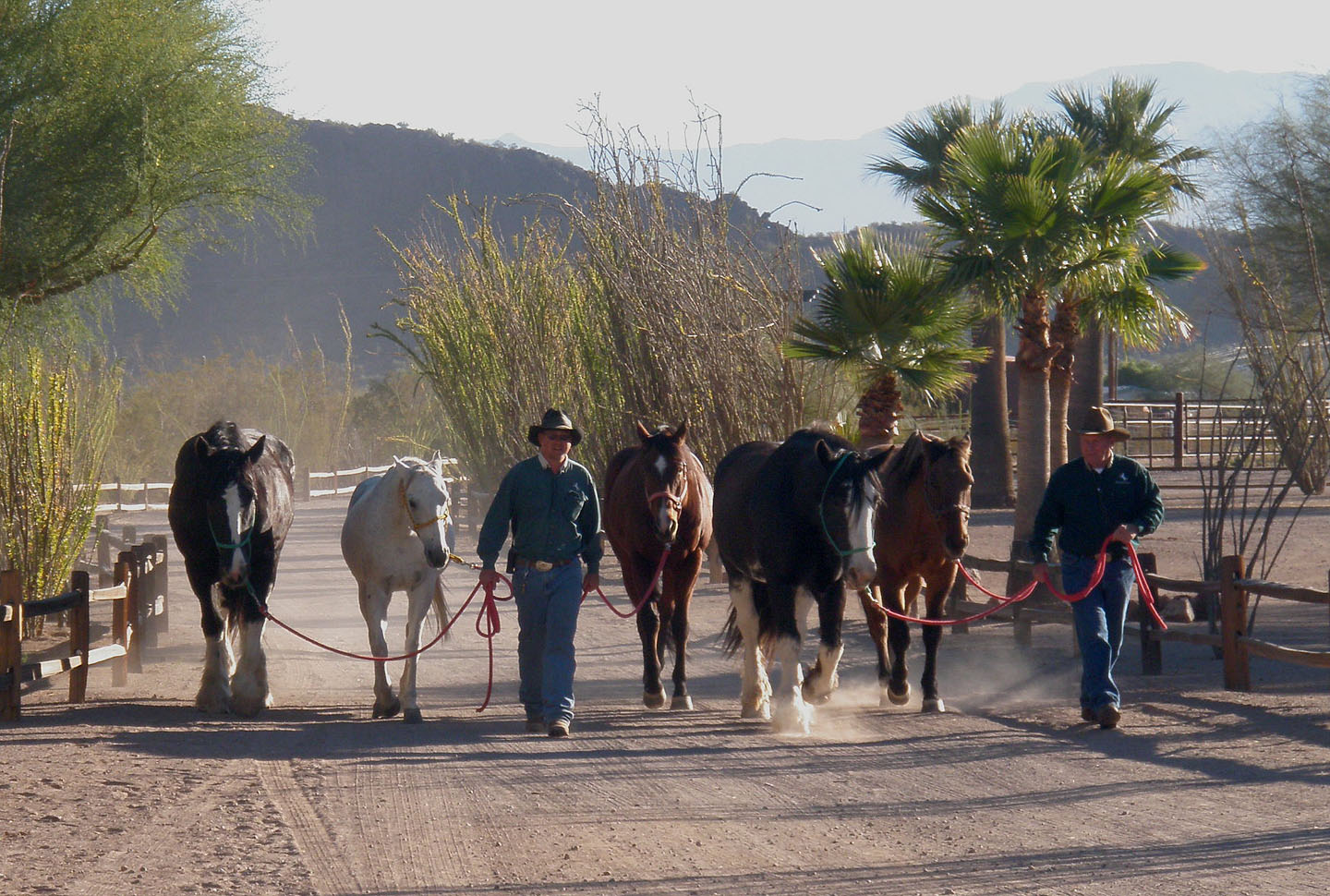
Art tells about his work as we watch a cowboy on horseback lead some cute burros to the barn to be freeze-branded. The lucky burros will be adopted by a person or persons who must show they can take good care of them. After a year's probation, the Refuge sells the new owner the burro or wild horse and they live happily ever after.

There are two beautiful black burros from Tonopah, Nevada in a pen with a frisky mustang. In my series I intend to give P.K. a mustang to ride. Those burros are cute but they wouldn't go as fast as that frisky mustang. In the Wild West, you want a fast horse to get away from bad guys.

"Are burros really smarter than horses?" I ask Art.

"You bet," he says.

"I was going to give the 12-year-old hero of my new Western series a mustang," I say to Art. "Do you think I should give him a burro instead?"

"No," says Art. "Mustang."

"Good," I say. "That's what I thought."

But it's nice to hear it from an expert.

For more information on the Happy Trails Wild Horse & Burro Refuge, visit their website www.blm.gov/wo/st/en/prog/wild_horse_and_burro.html

Wednesday, November 10, 2010

Roadrunner & Coyote

Two years ago in Death Valley I had my first encounter with a coyote in the Furnace Creek Inn parking lot. He was less than a car length away looking furtive and blasé at the same time.

Today I have my first encounter with a roadrunner in the same place: the Furnace Creek Inn parking lot. There it is, spotted by my sister Jennifer, also known as "Hawkeye" because she has an instinct about critters and signs.

(If we were 49ers on a wagon train, she would have been the scout. Without her I would have been a pile of bones bleached white in the desert. I never look at signs. She always does.)

'Look!' said Jennifer, as we are backing out of the Furnace Creek Inn parking lot after a quick look at the pool and gardens. 'There's a roadrunner.'

And sure enough, there it is.

The night before Jennifer spotted two coyotes loping across the desert, lit by our headlights.

Later that day we go for an afternoon horse ride out of Furnace Creek Stables. My ribs have pretty much recovered from my four days of horse riding at White Stallion Ranch in Arizona. It's nice to get on a horse again. Hilda is a lovely mare, responsive and good-natured. (I wish I'd had a horse like her at White Stallion.)

The three of us start happily through the dusty late afternoon Death Valley landscape.

Our wrangler, Luke, points out a coyote. Jennifer is the first to spot it. I hope we might see some more, but for the next hour: nothing. No coyotes. No rodents. No birds. The desert is full of dust and silence and lengthening shadows. I love it.


We are almost back at the stables when suddenly our horses are running off the path. My first thought is: 'Maybe we should have opted for helmets...' My second thought is that Jennifer's big gelding, Atlas, bit my mare Hilda on the rump.

'Pull them up!' cries Luke. 'Pull them up!'

Hilda is running toward a fallen mesquite trunk and she is over it before I can react and pull back on the reins. But I am safely over and we are all three still astride our horses. Hilda and the other two horses come to a stop. Our hearts are pounding.

'What happened?' said Jennifer.

'A coyote came out of the sage and spooked Richard's horse, Chief,' says Luke.

'How do you know it was a coyote?' I ask.

'I saw it over my shoulder,' says Luke.

We are all three flushed with excitement from our unexpected and short-lived fast ride.

'Did you see me jump that log?' I ask, still a bit breathless.

'Actually,' says Luke, 'Hilda just stepped over it.'

'Oh,' I say.

But we are all pleased that we survived our few seconds of excitement.

Later that evening, after the sun goes down, we go to a viewing platform near Furnace Creek Golf Club, which Luke tells us is a favorite haunt of coyotes. Once again, Jennifer is the first to spot one loping across a green to join his two friends.

So the tally for the last twenty four hours is Coyotes 7, Roadrunners 1.

Friday, November 5, 2010

Not a Cowgirl

White Stallion Ranch is gorgeous but it has proved to me once and for all that I am definitely NOT a cowgirl. Or even much of a tomboy. 

I am definitely a City Slicker. A Dudette. A Couch Rider, not a Horse Rider. 

I just got passed for a "fast ride" but my ribs were so sore that I released Bailey into the wild. 

So instead I opted for the three hour hike up Mesa Verde the following morning. Made the mistake of wearing my boots, which were actually fine for the first hour or so. I managed to avoid the twenty or thirty species of cactus all out to get us. But then we started climbing. The mountain got steep and slippery and our guide Karen (above) told me I'd have trouble going down. It's always harder going down a mountain. I began to have qualms. Then when my left boot started rubbing my heel, I had some more qualms. The other five members of our party (all stiff-upper-lip Brits) said they were happy to go on, but when I saw what we were in for I said: "I don't think I can do this." 

Yes, I wussed out. 

Totally. 

(But here is a secret. Almost every member of our party quietly thanked me afterwards.)

Still, I now know I am better off being a writer in London than a tomboy cowgirl. 

Guess that means I'll have to change the name of this blog. 

Thursday, November 4, 2010

Chewin' Tobacco

One of my goals on this Western research trip is to find a spittoon. Why? I think it will be a great way to engage children and get them thinking about how the olden days in Western America were different from modern times. It also has the Ew! factor, which always helps. 

When we go to Old Tucson Movie Studios I keep an eye out for a replica spittoon in the gift shops. One of the shops looks as if it might just stock such an item. 

"Do you sell spittoons?" I ask. 

They don't, but another visitor to the shop - Steve - looks up with interest.  He wants to know why I'm looking for such an object. When I tell him, he admits that he chews tobacco. He pulls out a pack of 

"What's it like?" I ask. 

"Like smoking a cigarette," he replies. 

That doesn't help me. I've never smoked.

"What was your first time like?" I ask. "Do you remember it?"

He nods. "I was sick." He pulls out a packet of Red Man. "Want to try some?"

For research purposes, I really should. Generously he lets me take a pinch. It is soft, dark and moist. 

"Put it between your gum and your cheek and DON'T SWALLOW," he says. "It might burn a little."

I put a raisin-sized chunk in my cheek. "Is that too much?" 

"No, that's fine. That won't kill ya."

It tastes sweet. A bit like what? Licorice? A raisin? A bit of both? 

I don't swallow, but when I begin to feel a tingle I go outside to spit.
No spitting on the boardwalk, so I find a dusty place behind a cactus. 

For the rest of the afternoon I have a tight head and feel a bit burpy. But luckily I'm not sick. 

A few hours later I feel like myself again. 

Why anyone would do this, I'm not sure. But at least I can say I know what it's like...

Oh, and I am still on the hunt for a spittoon.

Wednesday, November 3, 2010

Do I like Riding?

Over dinner on our first night at White Stallion Ranch, co-owner Russell True comes around and asks who will be going on the slow ride the next morning. They like all new arrivals to go on this first slow ride so they can assess your proficiency level.

We duly sign up for the first slow ride and also for lessons at 1.00. I guess Mark Bedor's promise that White Stallion Ranch will match you with the perfect horse only if you're not an absolute beginner. If you are a greenhorn your horse needs to train you. On our ride the next morning, my horse stops to tear at creosote bushes, Jennifer's nips at the horse in front and Richard's drags his heels.

But it's wonderful to ride through the desert at 9.00am when it's still relatively cool. This first jaunt lasts about 90 minutes. When we get back our rooms are all clean and made up. Lunch is BLTs and lemonade, then off for our lesson with Virginia. The three of us are together and there's a bit of a wait because she takes us one at a time.

I have been assigned Bailey, a 21 year old bay with a white star on his forehead. He's a trooper but often sighs deeply. He knows I am a dudette. Jennifer gets an ornery sorrel called Mesquite. They have a love hate relationship: Mesquite loves to nibble horses who invade his personal space and Jennifer hates it when he does that. But she decides to stick it out and not request a new horse. Richard has a lovely gelding called Greycloud who has an almost Zenlike calm. "He's a sweetie!" I say. "He's a slug," remarks Jennifer dryly. Whichever way you want to interpret it, Richard and Greycloud look great together.

Following our lesson is an optional outdoor seminar with head wrangler Carol and the prettiest Palomino I've ever seen, a two year old gelding. Carol demonstrates Frank Bell's method of gentle training with its seven steps: 1. bonding, 2. take & give, 3. intimacy, 4. the dance begins, 5. desensitizing, 6. ballet on the ground & 7. ballet in the saddle. She demonstrates all except the last one. It is fascinating to see a real expert bond with a horse. She doesn't just blow in the Palomino's nose, she rubs his eyes, ears and even gums! I'm not sure I'm ready to rub Bailey's gums.

At 4.00pm on Mondays is something called "team penning". The three of us sit on bleachers and watch how it's done. The best team of four includes a ten-year-old boy named Tom from England who's been coming here to White Stallion Ranch for four years. He puts us all to shame.

Over the next few days it's a variation on the same format: Russell comes round charmingly while we're at dinner and puts us down for rides and/or lessons. (It's amazing the way he and all the other wranglers know the names of all the guests. When the White Stallion is full this is about 85 people!) There are other excursions that don't involve riding, like nature walks, hikes and hay rides, but the main point of coming here is to ride.

I'm still not sure how much I like riding; especially after a very slow ride up into the desert on Tuesday afternoon, for wine and cheese. After our second lesson, my bottom bones hurt and the balls of my feet are hot from "keeping my heels down". Most of the others love it, but to me it feels very tedious. (I preferred a nature walk Richard and I did that morning.) But I'll wait till lesson 3 and my first "fast ride" before I decide whether horse riding is something I could learn to love...

Tuesday, November 2, 2010

Old Tucson Studios

It's around noon on Sunday, October 31st. We head south for the Old Tucson Movies Studios. The most impressive cacti - the iconic ones with upraised "arms" - are called Saguaro. They give their name to this national park. Apparently they don't even grow arms until they are 75. Some of them are hundreds of years old. There are at least a dozen other species of cacti on the canyon road. It's a primitive, beautiful landscape. I half expect a band of Apache to appear over the nearest ridge. We are so busy looking out for John Wayne or Clint Eastwood that we overshoot the Studios by a couple of miles.

This turns out to be serendipitous because it's lunchtime and we stop at a cafe called Coyote Pause. It's in a small strip mall which is holding a Doggie Flea Market. You can buy doggie beds, doggie cushion covers, doggie outfits and treats for dogs, etc. Dogs are in attendance, dressed in their Halloween outfits. We have salad and iced tea in a sunny annex, then head back towards the studios.

It's off season, so not too crowded. There are only thirty, maybe forty cars in the parking lot. Main Street of the western town looks strangely familiar. Outside Phoebe's Café, a tour guide called Jeff tells us why this place looks familiar: about fifty famous Western films were shot here. After Jeff's tour finishes, we watch a staged shoot-out in the street and a hurdy-gurdy show in the saloon. Both are good fun.

The studios close at 4.00 and we're on our way out when the mini steam train blows its whistle. It's a kiddie ride but nobody else is around so we furtively climb on. We are the only three passengers. Today is Halloween, so headless horsemen and Freddie Krugers lurk in the shrubbery. They aren't so scary under a blue sky and golden sun. Apaches would be better, but it's a great ride.

A few miles down the road from Old Tucson Studios is the Sonora Desert Museum. Late afternoon is the perfect time to go. The setting sun backlights cacti and trees. A small collection of wildlife is just waking from their siestas. We see two mountain lions, one of whom is playing with his blue ball. A black bear is still groggy from his nap and the mule deer shows us his tail. Inside the reptile house we see lots of snakes, tarantulas and other creepy crawlies. Only the Gila Monster is staying in his burrow.

On the way out a sign warns us not to feed the coyotes.