Thursday, November 4, 2010

Chewin' Tobacco

One of my goals on this Western research trip is to find a spittoon. Why? I think it will be a great way to engage children and get them thinking about how the olden days in Western America were different from modern times. It also has the Ew! factor, which always helps. 

When we go to Old Tucson Movie Studios I keep an eye out for a replica spittoon in the gift shops. One of the shops looks as if it might just stock such an item. 

"Do you sell spittoons?" I ask. 

They don't, but another visitor to the shop - Steve - looks up with interest.  He wants to know why I'm looking for such an object. When I tell him, he admits that he chews tobacco. He pulls out a pack of 

"What's it like?" I ask. 

"Like smoking a cigarette," he replies. 

That doesn't help me. I've never smoked.

"What was your first time like?" I ask. "Do you remember it?"

He nods. "I was sick." He pulls out a packet of Red Man. "Want to try some?"

For research purposes, I really should. Generously he lets me take a pinch. It is soft, dark and moist. 

"Put it between your gum and your cheek and DON'T SWALLOW," he says. "It might burn a little."

I put a raisin-sized chunk in my cheek. "Is that too much?" 

"No, that's fine. That won't kill ya."

It tastes sweet. A bit like what? Licorice? A raisin? A bit of both? 

I don't swallow, but when I begin to feel a tingle I go outside to spit.
No spitting on the boardwalk, so I find a dusty place behind a cactus. 

For the rest of the afternoon I have a tight head and feel a bit burpy. But luckily I'm not sick. 

A few hours later I feel like myself again. 

Why anyone would do this, I'm not sure. But at least I can say I know what it's like...

Oh, and I am still on the hunt for a spittoon.

Wednesday, November 3, 2010

Do I like Riding?

Over dinner on our first night at White Stallion Ranch, co-owner Russell True comes around and asks who will be going on the slow ride the next morning. They like all new arrivals to go on this first slow ride so they can assess your proficiency level.

We duly sign up for the first slow ride and also for lessons at 1.00. I guess Mark Bedor's promise that White Stallion Ranch will match you with the perfect horse only if you're not an absolute beginner. If you are a greenhorn your horse needs to train you. On our ride the next morning, my horse stops to tear at creosote bushes, Jennifer's nips at the horse in front and Richard's drags his heels.

But it's wonderful to ride through the desert at 9.00am when it's still relatively cool. This first jaunt lasts about 90 minutes. When we get back our rooms are all clean and made up. Lunch is BLTs and lemonade, then off for our lesson with Virginia. The three of us are together and there's a bit of a wait because she takes us one at a time.

I have been assigned Bailey, a 21 year old bay with a white star on his forehead. He's a trooper but often sighs deeply. He knows I am a dudette. Jennifer gets an ornery sorrel called Mesquite. They have a love hate relationship: Mesquite loves to nibble horses who invade his personal space and Jennifer hates it when he does that. But she decides to stick it out and not request a new horse. Richard has a lovely gelding called Greycloud who has an almost Zenlike calm. "He's a sweetie!" I say. "He's a slug," remarks Jennifer dryly. Whichever way you want to interpret it, Richard and Greycloud look great together.

Following our lesson is an optional outdoor seminar with head wrangler Carol and the prettiest Palomino I've ever seen, a two year old gelding. Carol demonstrates Frank Bell's method of gentle training with its seven steps: 1. bonding, 2. take & give, 3. intimacy, 4. the dance begins, 5. desensitizing, 6. ballet on the ground & 7. ballet in the saddle. She demonstrates all except the last one. It is fascinating to see a real expert bond with a horse. She doesn't just blow in the Palomino's nose, she rubs his eyes, ears and even gums! I'm not sure I'm ready to rub Bailey's gums.

At 4.00pm on Mondays is something called "team penning". The three of us sit on bleachers and watch how it's done. The best team of four includes a ten-year-old boy named Tom from England who's been coming here to White Stallion Ranch for four years. He puts us all to shame.

Over the next few days it's a variation on the same format: Russell comes round charmingly while we're at dinner and puts us down for rides and/or lessons. (It's amazing the way he and all the other wranglers know the names of all the guests. When the White Stallion is full this is about 85 people!) There are other excursions that don't involve riding, like nature walks, hikes and hay rides, but the main point of coming here is to ride.

I'm still not sure how much I like riding; especially after a very slow ride up into the desert on Tuesday afternoon, for wine and cheese. After our second lesson, my bottom bones hurt and the balls of my feet are hot from "keeping my heels down". Most of the others love it, but to me it feels very tedious. (I preferred a nature walk Richard and I did that morning.) But I'll wait till lesson 3 and my first "fast ride" before I decide whether horse riding is something I could learn to love...

Tuesday, November 2, 2010

Old Tucson Studios

It's around noon on Sunday, October 31st. We head south for the Old Tucson Movies Studios. The most impressive cacti - the iconic ones with upraised "arms" - are called Saguaro. They give their name to this national park. Apparently they don't even grow arms until they are 75. Some of them are hundreds of years old. There are at least a dozen other species of cacti on the canyon road. It's a primitive, beautiful landscape. I half expect a band of Apache to appear over the nearest ridge. We are so busy looking out for John Wayne or Clint Eastwood that we overshoot the Studios by a couple of miles.

This turns out to be serendipitous because it's lunchtime and we stop at a cafe called Coyote Pause. It's in a small strip mall which is holding a Doggie Flea Market. You can buy doggie beds, doggie cushion covers, doggie outfits and treats for dogs, etc. Dogs are in attendance, dressed in their Halloween outfits. We have salad and iced tea in a sunny annex, then head back towards the studios.

It's off season, so not too crowded. There are only thirty, maybe forty cars in the parking lot. Main Street of the western town looks strangely familiar. Outside Phoebe's Café, a tour guide called Jeff tells us why this place looks familiar: about fifty famous Western films were shot here. After Jeff's tour finishes, we watch a staged shoot-out in the street and a hurdy-gurdy show in the saloon. Both are good fun.

The studios close at 4.00 and we're on our way out when the mini steam train blows its whistle. It's a kiddie ride but nobody else is around so we furtively climb on. We are the only three passengers. Today is Halloween, so headless horsemen and Freddie Krugers lurk in the shrubbery. They aren't so scary under a blue sky and golden sun. Apaches would be better, but it's a great ride.

A few miles down the road from Old Tucson Studios is the Sonora Desert Museum. Late afternoon is the perfect time to go. The setting sun backlights cacti and trees. A small collection of wildlife is just waking from their siestas. We see two mountain lions, one of whom is playing with his blue ball. A black bear is still groggy from his nap and the mule deer shows us his tail. Inside the reptile house we see lots of snakes, tarantulas and other creepy crawlies. Only the Gila Monster is staying in his burrow.

On the way out a sign warns us not to feed the coyotes.

Monday, November 1, 2010

White Stallion Ranch

White Stallion Ranch has a shuttle which can pick us up from our hotel near Tucson airport but not until 1.15. Arghh! It's 9.15 and we have precious hours in Arizona, don't want to miss a minute of it. So we bite the bullet and decide to get a taxi. It'll cost us $80+ but the Ranch has a rental car waiting for us and it will buy us three precious hours.

Our Armenian taxi driver speeds us on the freeway past downtown Tucson and we exit near Twin Peaks Drive. Over a ridge and we are in a desert filled with dozens of different species of cactus. The jagged brown mountains look familiar from a dozen Western movies. We nearly miss the turning down a dirt road. No sign of the ranch, just cactus but it's only about half a mile until we see the corral with horses on our left.

Jackie and Gabriel check us in and Jackie gives us the tour of the ranch. It exceeds my expectations. Stables, pool, shop, a lounge and bar with horse saddle barstools, outdoor and indoor dining areas, landscaped grounds with every cactus and tree species labelled, etc, etc. I love it! Jennifer, Richard and I are sharing a capin. Jennifer gets one part and Richard and I get a suite. But it's OK because her bathroom is bigger than ours. We can open the doors between the two sections if we want, or keep it closed for privacy.

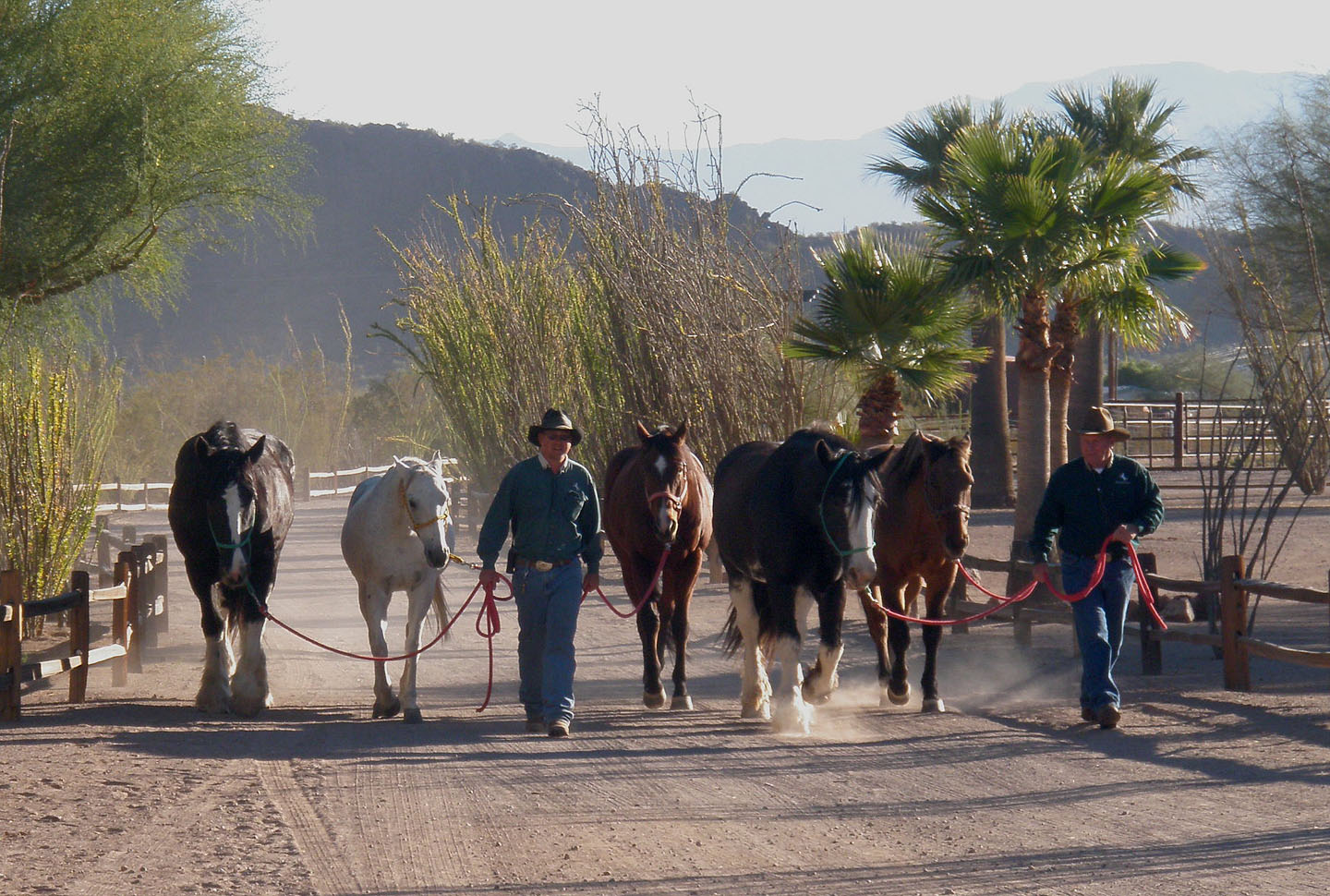
And ah, the smell! Horses! (Though you can't smell them from our cabin.) Today is Sunday: the dude horses' Day of Rest. So all is peaceful. Birds tweet, a donkey brays, and although it's 80 degrees a breeze and the dry air makes it feel like 70.

We've got a black car with an authentic layer of cowboy dust coating it. Jennifer does the paperwork while Richard buys cowboy hat and gloves in the shop. Then we hop in and are off to Old Tucson Film Studios and the Desert Museum...

Sunday, October 31, 2010

North of the Border

It's 9.00pm, the mercury is nudging 90 degrees fahrenheit... and it's nearly November.

We have just arrived in Tucson, Arizona.

The name "Tucson" – pronounced too-sawn – is the English spelling of a Spanish version of an Indian name meaning "at the base of the black hill". Tucson is also known as "The Old Pueblo". Only 60 miles north of the Mexican border, this state is famous as being the setting for lots of western movies. You know. The ones with dramatic rocks and iconic cactus, like Red River, 3.10 to Yuma (both versions) and Tombstone.

I'm here to research my new series, The Western Mysteries. My books are set in Nevada but we have come here to spend a few days at one of the best Dude Ranches in the world, the White Stallion Ranch.

They say you should always have a goal, so here are five things I hope to achieve while here.

1. learn interesting facts about horses (including how to ride them)
2. learn a few Indian tracking skills (my main character is half Indian)
3. buy a real or replica "medicine bag" like the one my character wears
4. buy a real or replica spittoon for my future school events
5. learn how to kill, skin and cook a prairie dog.

OK, that last one was a joke. I don't even know yet if there are prairie dogs out here. A visit to the Desert Museum should answer that question.


P.S. Sunday morning... Just went for a walk. Lovely sunrise over the mountains.

Wednesday, October 27, 2010

The Dude Ranch Abides

This Saturday my husband Richard and I are flying to Tucson, Arizona to spend a few days at a Dude Ranch. The White Stallion Ranch was recommended to me by journalist Mark Bedor. I met him when we were both standing in line for grub at the Cowboy Festival at Melody Ranch, waiting for an outdoor screening of High Noon. Mark told me I absolutely had to visit White Stallion Ranch if I ever got the chance. So now we are.

When I tell friends we're going to a Dude Ranch they mostly know what I mean. But some don't. That got me thinking. Why "Dude Ranch"? The word "dude" makes me think of Bill & Ted, or The Big Lebowski. But when the word "dude" was first coined in the 1870's, it meant a well-dressed (i.e. rich) city-dweller. According to Wikipedia, the King of the Dudes was a gentleman named Evander Berry Wall. (right) I don't know about "well-dressed"... His coat looks like a bell-jar swallowed a kilt and then burped up some clown buttons. But at least his shiny stovepipe hat matches his patent leather shoes.

So a "Dude" is essentially the opposite of a cowboy. And a "Dude Ranch" (AKA Guest Ranch) is where affluent city dwellers go to "get the Western experience". Today in the US, there are over 100 quality Dude Ranches. You can do full-on cattle drives and squat in the sagebrush, like Billy Crystal and his pals in the fun 1991 film City Slickers. ("Hello boys. I thought I'd mosey on over here. You know, I've never mosied before...") Or you can sit by the pool sipping strawberry margaritas and watching horses from upwind. I think the White Stallion Ranch will be somewhere in between.

The folk at WSR are certainly trendy. They tweet regularly and they are gratifyingly active on Facebook. When I asked them if Richard really truly needed boots to ride, they said any leather-soled shoe with a heel was OK, but boots are best. When I asked if he should buy them here in London or at Boot Barn in Tucson, they said buy them in London. Especially after they found out about our trendy boot shop on the Kings Road in Chelsea.

The wryly named R. Soles (say it out loud) sells fab boots designed by Judy Rothchild and others. You can either go to their shop or buy online. I bought a pair of boots there two years ago in anticipation of a Thelma-and-Louise memorial road trip with my sister. Jennifer and I didn't drive into the Grand Canyon, but we did spend an hour file-riding in Death Valley at sunset. We booked a short session at the glorious Furnace Creek Stables. Everyone there was very nice and professional, but the moment I swung up into the saddle, my mustang knew I was a dudette. He stopped to munch tasty sage whenever he felt like it and ignored my firm prompts to get moving. We were only there for a few hours, so the wranglers didn't have time to teach us anything.

Next week, however, I hope to really learn to ride a horse, not just sit astride one in my designer cowgirl boots. Richard is coming, too, and my sister Jennifer will meet us there. To see how the three of us get on, watch this space.

Friday, October 15, 2010

Western Mysteries!

Virginia City in 1862 is a glorified silver-mining camp on a barren mountain with a landscape like a singed cat. Seething with miners below ground and hustlers above, it’s a deadly place.


When 12-year-old half-breed P.K. "Pinky" Pinkerton arrives in Virginia City – homeless, penniless and hunted – things don’t look good. But armed with a Smith & Wesson seven-shooter and a knack for disguises, P.K. takes on gamblers, dancing girls and desperados.

Pinky’s dream is to work for the Pinkerton Detective Agency in Chicago. But there is so much crime in Virginia City that soon the town has its first detective: P.K. Pinkerton, Private Eye.


Western Mystery #1 - The Case of the Deadly Desperados 
Virginia City, Nevada Territory - September 1862:

When desperados kill the preacher and his wife in a small frontier town, their foster child P.K. is forced to go on the run. P.K. must get a valuable letter to the Recorder’s Office before anyone else can get their hands on it. It’s not easy: Virginia City is full of gamblers, hurdy girls, saloon-keepers and gunmen, all of them on the make. But there are possible allies: Sam Clemens, the new reporter for the paper; a gambler called "Poker Face Jace"; a derringer-packing Soiled Dove, and a Chinese photographer’s apprentice named Ping. Will P.K. survive and go on to solve more mysteries? H-ll, yeah! There are sequels.