


We've got a black car with an authentic layer of cowboy dust coating it. Jennifer does the paperwork while Richard buys cowboy hat and gloves in the shop. Then we hop in and are off to Old Tucson Film Studios and the Desert Museum...


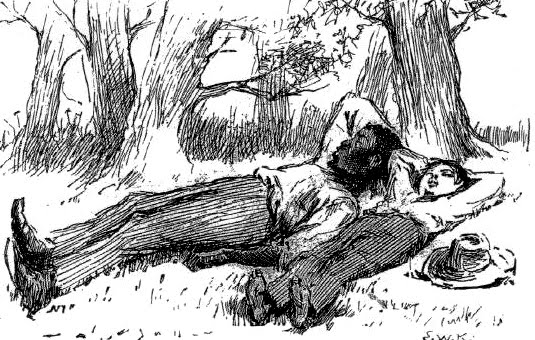 |
| Lazy Jim & Huck from The Adventures of Huckleberry Finn |
 In the winter of 1861, failed prospector Alf Doten was living in Milpitas, California, trying to be a farmer. The following year he would leave the Bay Area and head for Nevada to give prospecting one last try. He would fail again at prospecting but would end up as a newspaper reporter in Virginia City. Now, over a hundred years after his death, he is moderately well-known as a chronicler of Nevada History. For Alf Doten was a methodical diary-keeper, and the treasure he left was over 75 leather-bound diaries documenting fascinating aspects of daily day life in the old West. They have been edited and published in three big volumes (above) which I first discovered at the B Street B&B in Virginia City. The Journals of Alfred Doten (1849 - 1903)
 Yesterday evening, I had to go into central London to an event at the British Museum. As I was passing Jarndyce, the well-known Antiquarian Booksellers, a book in the window caught my eye: Premature Burial! I was early for my event so went into the bookshop and asked if I could look at the book. "You can look at it," said the nice shopkeeper, "but you can't buy it. It belongs to the owner." I perched on the edge of a walnut armchair and opened the book. Almost immediately my eyes fell upon this sentence: "Live burials are far more frequent than most people think." Ew!
 Sure enough, the book was full of accounts of people buried alive in the 19th century. Many people were so afraid of premature burial that they put clauses in their wills demanding that they be interred with coffins fit out with contraptions like that on the left. You could pull a little handle and a flag would pop up above ground, showing that you had been buried alive.
 The Territorial Enterprise was a famous newspaper in the Nevada town of Virginia City.
  The first office of the Territorial Enterprise was a rickety wooden building up on A Street at the top of the town. We know this from the 1862 Directory of Nevada Territory. We even have a rough idea of what it looked like, thanks to a lithographic drawing by a talented young artist named Grafton T. Brown in 1861. (above) A full page ad in the 1862 Directory tells us that the magazine was published every morning except Sundays, which meant the reporters and printers had Saturday off.
  In late September of 1862 a dusty 27-year-old failed prospector arrived at the Enterprise to take up a position as a local reporter. His name was Samuel Clemens and he had been promised $25 a week. In those days reporters often used funny or witty pen-names instead of their real names. At first, Clemens signed his articles "Josh". But early in 1863 he tried out the byline "Mark Twain" and it stuck. That is the name by which people know him today. (left: Mark Twain in 1862, before he grew his famous moustache)
 Some less-famous writers who worked on the Territorial Enterprise were William Wright (whose pen-name was "Dan De Quille") and Alfred Doten. From the 1862 Directory, we even know the names of some of the printers who worked on the paper, like D.P. Iams and James Richards. Another famous employee of the Territorial Enterprise newspaper was the Chinese cook, Old Joe. Dan De Quille writes that Old Joe did the cooking, and three times each day the whole crowd of "newspaper men" were called out to the long table in the shed to get their "square meal."
 Shortly after Mark Twain's arrival in Virginia City, the Enterprise moved offices to a building on North C Street. (Any street above Union in Virginia city is North.) By the summer of 1863, the Enterprise had moved yet again, to a big brick building called the "Enterprise Building" on South C Street between Sutton and Union. This was probably to accomodate a new steam-powered printing press.
  By now, the boom times had arrived and the Enterprise's day off had moved, too. Now everybody worked hard on Saturday to get out a special Sunday edition devoted to mining news and other related matters. Everyone was happy and busy. Then, in the spring of 1864, Mark Twain wrote a tall tale that got him into "hot water". He had to "skedaddle" out of Virginia City. Twain went to San Francisco to work for another newspaper, and sometimes he sent articles back to the Territorial Enterprise. But within a few years, he had become a famous writer and a popular lecturer. (above: detail of the newspaper on 8 July 1874, the year before the great fire, shows offices on 24 South C Street)
 Twain came back to Virginia City a couple of times over the next few years, but he was long gone by 1875, when a terrible fire burnt down his former workplace. The Territorial Enterprise you see today was built in 1876, several years after Twain's last visit, so he never set foot in this building. However, down in the basement you will find the Mark Twain Museum, full of fascinating items such as printing presses, a desk and even a toilet like the one Mark Twain might have used.


