It's 9.00pm, the mercury is nudging 90 degrees fahrenheit... and it's nearly November.
We have just arrived in Tucson, Arizona.
The name "Tucson" – pronounced too-sawn – is the English spelling of a Spanish version of an Indian name meaning "at the base of the black hill". Tucson is also known as "The Old Pueblo". Only 60 miles north of the Mexican border, this state is famous as being the setting for lots of western movies. You know. The ones with dramatic rocks and iconic cactus, like Red River, 3.10 to Yuma (both versions) and Tombstone.
I'm here to research my new series, The Western Mysteries. My books are set in Nevada but we have come here to spend a few days at one of the best Dude Ranches in the world, the White Stallion Ranch.
They say you should always have a goal, so here are five things I hope to achieve while here.
1. learn interesting facts about horses (including how to ride them)
2. learn a few Indian tracking skills (my main character is half Indian)
3. buy a real or replica "medicine bag" like the one my character wears
4. buy a real or replica spittoon for my future school events
5. learn how to kill, skin and cook a prairie dog.
OK, that last one was a joke. I don't even know yet if there are prairie dogs out here. A visit to the Desert Museum should answer that question.
P.S. Sunday morning... Just went for a walk. Lovely sunrise over the mountains.
Sunday, October 31, 2010
Wednesday, October 27, 2010
The Dude Ranch Abides
This Saturday my husband Richard and I are flying to Tucson, Arizona to spend a few days at a Dude Ranch. The White Stallion Ranch was recommended to me by journalist Mark Bedor. I met him when we were both standing in line for grub at the Cowboy Festival at Melody Ranch, waiting for an outdoor screening of High Noon. Mark told me I absolutely had to visit White Stallion Ranch if I ever got the chance. So now we are.
When I tell friends we're going to a Dude Ranch they mostly know what I mean. But some don't. That got me thinking. Why "Dude Ranch"? The word "dude" makes me think of Bill & Ted, or The Big Lebowski. But when the word "dude" was first coined in the 1870's, it meant a well-dressed (i.e. rich) city-dweller. According to Wikipedia, the King of the Dudes was a gentleman named Evander Berry Wall. (right) I don't know about "well-dressed"... His coat looks like a bell-jar swallowed a kilt and then burped up some clown buttons. But at least his shiny stovepipe hat matches his patent leather shoes.
So a "Dude" is essentially the opposite of a cowboy. And a "Dude Ranch" (AKA Guest Ranch) is where affluent city dwellers go to "get the Western experience". Today in the US, there are over 100 quality Dude Ranches. You can do full-on cattle drives and squat in the sagebrush, like Billy Crystal and his pals in the fun 1991 film City Slickers. ("Hello boys. I thought I'd mosey on over here. You know, I've never mosied before...") Or you can sit by the pool sipping strawberry margaritas and watching horses from upwind. I think the White Stallion Ranch will be somewhere in between.
The folk at WSR are certainly trendy. They tweet regularly and they are gratifyingly active on Facebook. When I asked them if Richard really truly needed boots to ride, they said any leather-soled shoe with a heel was OK, but boots are best. When I asked if he should buy them here in London or at Boot Barn in Tucson, they said buy them in London. Especially after they found out about our trendy boot shop on the Kings Road in Chelsea.
The wryly named R. Soles (say it out loud) sells fab boots designed by Judy Rothchild and others. You can either go to their shop or buy online. I bought a pair of boots there two years ago in anticipation of a Thelma-and-Louise memorial road trip with my sister. Jennifer and I didn't drive into the Grand Canyon, but we did spend an hour file-riding in Death Valley at sunset. We booked a short session at the glorious Furnace Creek Stables. Everyone there was very nice and professional, but the moment I swung up into the saddle, my mustang knew I was a dudette. He stopped to munch tasty sage whenever he felt like it and ignored my firm prompts to get moving. We were only there for a few hours, so the wranglers didn't have time to teach us anything.
Next week, however, I hope to really learn to ride a horse, not just sit astride one in my designer cowgirl boots. Richard is coming, too, and my sister Jennifer will meet us there. To see how the three of us get on, watch this space.
When I tell friends we're going to a Dude Ranch they mostly know what I mean. But some don't. That got me thinking. Why "Dude Ranch"? The word "dude" makes me think of Bill & Ted, or The Big Lebowski. But when the word "dude" was first coined in the 1870's, it meant a well-dressed (i.e. rich) city-dweller. According to Wikipedia, the King of the Dudes was a gentleman named Evander Berry Wall. (right) I don't know about "well-dressed"... His coat looks like a bell-jar swallowed a kilt and then burped up some clown buttons. But at least his shiny stovepipe hat matches his patent leather shoes.
So a "Dude" is essentially the opposite of a cowboy. And a "Dude Ranch" (AKA Guest Ranch) is where affluent city dwellers go to "get the Western experience". Today in the US, there are over 100 quality Dude Ranches. You can do full-on cattle drives and squat in the sagebrush, like Billy Crystal and his pals in the fun 1991 film City Slickers. ("Hello boys. I thought I'd mosey on over here. You know, I've never mosied before...") Or you can sit by the pool sipping strawberry margaritas and watching horses from upwind. I think the White Stallion Ranch will be somewhere in between.
The folk at WSR are certainly trendy. They tweet regularly and they are gratifyingly active on Facebook. When I asked them if Richard really truly needed boots to ride, they said any leather-soled shoe with a heel was OK, but boots are best. When I asked if he should buy them here in London or at Boot Barn in Tucson, they said buy them in London. Especially after they found out about our trendy boot shop on the Kings Road in Chelsea.
The wryly named R. Soles (say it out loud) sells fab boots designed by Judy Rothchild and others. You can either go to their shop or buy online. I bought a pair of boots there two years ago in anticipation of a Thelma-and-Louise memorial road trip with my sister. Jennifer and I didn't drive into the Grand Canyon, but we did spend an hour file-riding in Death Valley at sunset. We booked a short session at the glorious Furnace Creek Stables. Everyone there was very nice and professional, but the moment I swung up into the saddle, my mustang knew I was a dudette. He stopped to munch tasty sage whenever he felt like it and ignored my firm prompts to get moving. We were only there for a few hours, so the wranglers didn't have time to teach us anything.
Next week, however, I hope to really learn to ride a horse, not just sit astride one in my designer cowgirl boots. Richard is coming, too, and my sister Jennifer will meet us there. To see how the three of us get on, watch this space.
Friday, October 15, 2010
Western Mysteries!
Virginia City in 1862 is a glorified silver-mining camp on a barren mountain with a landscape like a singed cat. Seething with miners below ground and hustlers above, it’s a deadly place.
When 12-year-old half-breed P.K. "Pinky" Pinkerton arrives in Virginia City – homeless, penniless and hunted – things don’t look good. But armed with a Smith & Wesson seven-shooter and a knack for disguises, P.K. takes on gamblers, dancing girls and desperados.
Pinky’s dream is to work for the Pinkerton Detective Agency in Chicago. But there is so much crime in Virginia City that soon the town has its first detective: P.K. Pinkerton, Private Eye.
When 12-year-old half-breed P.K. "Pinky" Pinkerton arrives in Virginia City – homeless, penniless and hunted – things don’t look good. But armed with a Smith & Wesson seven-shooter and a knack for disguises, P.K. takes on gamblers, dancing girls and desperados.
Pinky’s dream is to work for the Pinkerton Detective Agency in Chicago. But there is so much crime in Virginia City that soon the town has its first detective: P.K. Pinkerton, Private Eye.
Western Mystery #1 - The Case of the Deadly Desperados
Virginia City, Nevada Territory - September 1862:
When desperados kill the preacher and his wife in a small frontier town, their foster child P.K. is forced to go on the run. P.K. must get a valuable letter to the Recorder’s Office before anyone else can get their hands on it. It’s not easy: Virginia City is full of gamblers, hurdy girls, saloon-keepers and gunmen, all of them on the make. But there are possible allies: Sam Clemens, the new reporter for the paper; a gambler called "Poker Face Jace"; a derringer-packing Soiled Dove, and a Chinese photographer’s apprentice named Ping. Will P.K. survive and go on to solve more mysteries? H-ll, yeah! There are sequels.
Thursday, September 16, 2010
Sam & Flavius Clemens
One of Mark Twain's favorite books was Suetonius' Lives of the Caesars. According to Twain's biographer, Albert Bigelow Paine, he carried it around and read it until his very last day.
Near the end of the book, Suetonius tells how the Emperor Domitian put to death many people including his own cousin Flavius Clemens, a man "below contempt for his want of energy." (Latin "contemptissimae inertiae...") In the margin of his well-thumbed copy of the book, next to the name "Clemens" and the words "want of energy", Mark Twain wrote "I guess this is where our line starts."
This is amusing because:
A. Mark Twain's real name was Sam Clemens
B. Mark Twain was famous for his want of energy.
Near the end of the book, Suetonius tells how the Emperor Domitian put to death many people including his own cousin Flavius Clemens, a man "below contempt for his want of energy." (Latin "contemptissimae inertiae...") In the margin of his well-thumbed copy of the book, next to the name "Clemens" and the words "want of energy", Mark Twain wrote "I guess this is where our line starts."
This is amusing because:
A. Mark Twain's real name was Sam Clemens
B. Mark Twain was famous for his want of energy.
![]() |
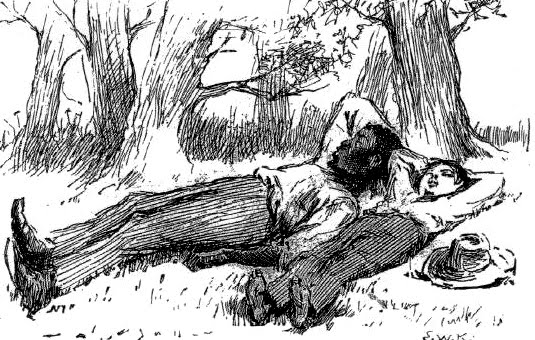
| Lazy Jim & Huck from The Adventures of Huckleberry Finn |
Tuesday, September 7, 2010
Buried Alive?
or "The Case of the Bleeding Corpse"
In the winter of 1861, failed prospector Alf Doten was living in Milpitas, California, trying to be a farmer. The following year he would leave the Bay Area and head for Nevada to give prospecting one last try. He would fail again at prospecting but would end up as a newspaper reporter in Virginia City. Now, over a hundred years after his death, he is moderately well-known as a chronicler of Nevada History. For Alf Doten was a methodical diary-keeper, and the treasure he left was over 75 leather-bound diaries documenting fascinating aspects of daily day life in the old West. They have been edited and published in three big volumes (above) which I first discovered at the B Street B&B in Virginia City. The Journals of Alfred Doten (1849 - 1903)
I have been going through Alf's journals to get period details for my new Western Mysteries. Two days ago, I had reached November 1861 when I came across a couple of entries that chilled my blood.
Nov 5 - Campbell came this AM & got my pick to dig a grave - Miss Abby Nash died this morning around 9 oclock, of typhoid fever... She was 17 yrs old -
Nov 6 - Cloudy - Morning I rode Ben to Peacock's - learned that Miss Nash is to be buried at 10 AM - rode home - hitched Ben & Poncho to wagon - got ready - David and I rode to Peacocks - Took Mrs Peacock & Annie and a gentleman friend of theirs on board - drove to Nash's - friends & neighbors had assembled - Mr Barquay from Berreyessa officiated as clergyman - he read from the Bible, prayed, exhorted & we sang a hymn to the tune of Wyndham - four of us brought out the coffin & put it in Jim Smith's spring wagon - She looked very natural - procession moved to grave which was dug over next the fence on the line between Nash's and Valpy's farms - a very lonely out of the way place - opened the coffin that all who wished might take last look at corpse - her head was not properly pillowed so that in crossing the rough field I heard it knocking against side of coffin, and a large quantity of blood came from the right nostril - I helped lower her into the grave - funeral over - drove round & left our Peacock passengers & drove home - This funeral was got up on the very cheapest possible scale, and cost old Nash very few dimes - quite a saving -
What sent a shiver through me was this: I had always understood that corpses didn't bleed. As I re-read the entries, a few phrases seemed to jump out of the account: "she looked very natural" and "a large quantity of blood came from the right nostril" ... Was the poor girl buried alive in that "lonely out of the way place" where no one could hear her knocking to be let out? A truly horrible prospect.
I immediately sent a tweet to one of my favorite authors: Lee Goldberg, author of Diagnosis Murder and the Monk books. Lee instantly put me on the track of Dr D.P. Lyle, author of Forensics for Dummies. I was unaware that Dr Lyle has a fantastic blog about forensics for crime writers and other such eccentrics. I emailed him and wondered whether I would ever get a reply.
Yesterday evening, I had to go into central London to an event at the British Museum. As I was passing Jarndyce, the well-known Antiquarian Booksellers, a book in the window caught my eye: Premature Burial! I was early for my event so went into the bookshop and asked if I could look at the book. "You can look at it," said the nice shopkeeper, "but you can't buy it. It belongs to the owner." I perched on the edge of a walnut armchair and opened the book. Almost immediately my eyes fell upon this sentence: "Live burials are far more frequent than most people think." Ew!
Sure enough, the book was full of accounts of people buried alive in the 19th century. Many people were so afraid of premature burial that they put clauses in their wills demanding that they be interred with coffins fit out with contraptions like that on the left. You could pull a little handle and a flag would pop up above ground, showing that you had been buried alive.
I was relieved to return home after my event and find that Dr Lyle, (the Forensics for Dummies doctor), had got back to me with a thorough and reassuring reply: "she was not buried alive and she did not bleed but rather this was either a broken down clot from her sinuses or purge fluid."
According to Dr Lyle, Abby Nash "could have had trauma to her face and blood could have collected in the sinuses. Blood initially clots and then begins to break down and separate into a contracted clot and serum. The serum or liquid part of the blood is usually tinged reddish brown in this circumstance and when they alter her position some of this could have leaked from her nose. This would simply be separated blood following the dictates of gravity. Also there is the situation of purge fluids. These appear as part of the decay of the body. This is blackish looking liquid that comes from the nose and often the mouth and has to do with decay of the tissues within the head. These usually appear a couple of days after death since it takes that long for the decay process to get that far. There are circumstances under which this process is sped up. Things like a very warm environment. Another is when someone has an infection. Here bacteria are already scattered throughout the body and therefore the decay process does not depend upon the intestinal tract breaking down first and releasing the bacteria within the bowel into the system. So she would already have bacteria in her bloodstream from her typhoid fever and therefore would decay much more rapidly."
I could rest easy. Poor young Abby Nash died tragically young. But at least she was not buried alive.

If you are of a ghoulish disposition and would like to read Premature Burial, you can do so online.
.
P.S. In the Arthur Conan Doyle 1901 short story 'The Disappearance of Lady Frances Carfax', a character is narrowly saved from being buried alive by the detective Sherlock Holmes.
I have been going through Alf's journals to get period details for my new Western Mysteries. Two days ago, I had reached November 1861 when I came across a couple of entries that chilled my blood.
Nov 5 - Campbell came this AM & got my pick to dig a grave - Miss Abby Nash died this morning around 9 oclock, of typhoid fever... She was 17 yrs old -
Nov 6 - Cloudy - Morning I rode Ben to Peacock's - learned that Miss Nash is to be buried at 10 AM - rode home - hitched Ben & Poncho to wagon - got ready - David and I rode to Peacocks - Took Mrs Peacock & Annie and a gentleman friend of theirs on board - drove to Nash's - friends & neighbors had assembled - Mr Barquay from Berreyessa officiated as clergyman - he read from the Bible, prayed, exhorted & we sang a hymn to the tune of Wyndham - four of us brought out the coffin & put it in Jim Smith's spring wagon - She looked very natural - procession moved to grave which was dug over next the fence on the line between Nash's and Valpy's farms - a very lonely out of the way place - opened the coffin that all who wished might take last look at corpse - her head was not properly pillowed so that in crossing the rough field I heard it knocking against side of coffin, and a large quantity of blood came from the right nostril - I helped lower her into the grave - funeral over - drove round & left our Peacock passengers & drove home - This funeral was got up on the very cheapest possible scale, and cost old Nash very few dimes - quite a saving -
What sent a shiver through me was this: I had always understood that corpses didn't bleed. As I re-read the entries, a few phrases seemed to jump out of the account: "she looked very natural" and "a large quantity of blood came from the right nostril" ... Was the poor girl buried alive in that "lonely out of the way place" where no one could hear her knocking to be let out? A truly horrible prospect.
I immediately sent a tweet to one of my favorite authors: Lee Goldberg, author of Diagnosis Murder and the Monk books. Lee instantly put me on the track of Dr D.P. Lyle, author of Forensics for Dummies. I was unaware that Dr Lyle has a fantastic blog about forensics for crime writers and other such eccentrics. I emailed him and wondered whether I would ever get a reply.
Yesterday evening, I had to go into central London to an event at the British Museum. As I was passing Jarndyce, the well-known Antiquarian Booksellers, a book in the window caught my eye: Premature Burial! I was early for my event so went into the bookshop and asked if I could look at the book. "You can look at it," said the nice shopkeeper, "but you can't buy it. It belongs to the owner." I perched on the edge of a walnut armchair and opened the book. Almost immediately my eyes fell upon this sentence: "Live burials are far more frequent than most people think." Ew!
Sure enough, the book was full of accounts of people buried alive in the 19th century. Many people were so afraid of premature burial that they put clauses in their wills demanding that they be interred with coffins fit out with contraptions like that on the left. You could pull a little handle and a flag would pop up above ground, showing that you had been buried alive. I was relieved to return home after my event and find that Dr Lyle, (the Forensics for Dummies doctor), had got back to me with a thorough and reassuring reply: "she was not buried alive and she did not bleed but rather this was either a broken down clot from her sinuses or purge fluid."
According to Dr Lyle, Abby Nash "could have had trauma to her face and blood could have collected in the sinuses. Blood initially clots and then begins to break down and separate into a contracted clot and serum. The serum or liquid part of the blood is usually tinged reddish brown in this circumstance and when they alter her position some of this could have leaked from her nose. This would simply be separated blood following the dictates of gravity. Also there is the situation of purge fluids. These appear as part of the decay of the body. This is blackish looking liquid that comes from the nose and often the mouth and has to do with decay of the tissues within the head. These usually appear a couple of days after death since it takes that long for the decay process to get that far. There are circumstances under which this process is sped up. Things like a very warm environment. Another is when someone has an infection. Here bacteria are already scattered throughout the body and therefore the decay process does not depend upon the intestinal tract breaking down first and releasing the bacteria within the bowel into the system. So she would already have bacteria in her bloodstream from her typhoid fever and therefore would decay much more rapidly."
I could rest easy. Poor young Abby Nash died tragically young. But at least she was not buried alive.

If you are of a ghoulish disposition and would like to read Premature Burial, you can do so online.
.
P.S. In the Arthur Conan Doyle 1901 short story 'The Disappearance of Lady Frances Carfax', a character is narrowly saved from being buried alive by the detective Sherlock Holmes.
Friday, September 3, 2010
Territorial Enterprise
Critters, Characters & Curiosities from The Western Mysteries
The Territorial Enterprise Newspaper
The Territorial Enterprise was a famous newspaper in the Nevada town of Virginia City.
It was established in 1858 in the town of Mormon Station (AKA Genoa) in the Carson Valley, but moved up to Virginia City in 1860 shortly after silver was discovered on the Comstock Lode. Virginia City suffered from frequent fires and for this and various other reasons the Enterprise moved offices a few times in its first two decades there.
The first office of the Territorial Enterprise was a rickety wooden building up on A Street at the top of the town. We know this from the 1862 Directory of Nevada Territory. We even have a rough idea of what it looked like, thanks to a lithographic drawing by a talented young artist named Grafton T. Brown in 1861. (above) A full page ad in the 1862 Directory tells us that the magazine was published every morning except Sundays, which meant the reporters and printers had Saturday off.
Dennis McCarthy and Joe Goodman were the owners and editors of the paper. Under their guidance the Territorial Enterprise became one of the best-known newspapers in the West. It carried national and local news, mining statistics, advertisements, etc. Frequently - when local news was thin - the reporters filled empty column space with witty stories and tall tales like the ones about the "Demon Frog" or the "Travelling Stones". Some of these stories were pure fiction but because they were printed in a newspaper many people believed them. Later, when readers discovered they had been "taken in" many of them became angry and accused the reporters of being "hoaxers".
In late September of 1862 a dusty 27-year-old failed prospector arrived at the Enterprise to take up a position as a local reporter. His name was Samuel Clemens and he had been promised $25 a week. In those days reporters often used funny or witty pen-names instead of their real names. At first, Clemens signed his articles "Josh". But early in 1863 he tried out the byline "Mark Twain" and it stuck. That is the name by which people know him today. (left: Mark Twain in 1862, before he grew his famous moustache)
Some less-famous writers who worked on the Territorial Enterprise were William Wright (whose pen-name was "Dan De Quille") and Alfred Doten. From the 1862 Directory, we even know the names of some of the printers who worked on the paper, like D.P. Iams and James Richards. Another famous employee of the Territorial Enterprise newspaper was the Chinese cook, Old Joe. Dan De Quille writes that Old Joe did the cooking, and three times each day the whole crowd of "newspaper men" were called out to the long table in the shed to get their "square meal."
Shortly after Mark Twain's arrival in Virginia City, the Enterprise moved offices to a building on North C Street. (Any street above Union in Virginia city is North.) By the summer of 1863, the Enterprise had moved yet again, to a big brick building called the "Enterprise Building" on South C Street between Sutton and Union. This was probably to accomodate a new steam-powered printing press.
By now, the boom times had arrived and the Enterprise's day off had moved, too. Now everybody worked hard on Saturday to get out a special Sunday edition devoted to mining news and other related matters. Everyone was happy and busy. Then, in the spring of 1864, Mark Twain wrote a tall tale that got him into "hot water". He had to "skedaddle" out of Virginia City. Twain went to San Francisco to work for another newspaper, and sometimes he sent articles back to the Territorial Enterprise. But within a few years, he had become a famous writer and a popular lecturer. (above: detail of the newspaper on 8 July 1874, the year before the great fire, shows offices on 24 South C Street)
Twain came back to Virginia City a couple of times over the next few years, but he was long gone by 1875, when a terrible fire burnt down his former workplace. The Territorial Enterprise you see today was built in 1876, several years after Twain's last visit, so he never set foot in this building. However, down in the basement you will find the Mark Twain Museum, full of fascinating items such as printing presses, a desk and even a toilet like the one Mark Twain might have used.
For more info about the Territorial Enterprise, go to the Official Site
And read Myth #101 at the Nevada Observer.
The Territorial Enterprise Newspaper
The Territorial Enterprise was a famous newspaper in the Nevada town of Virginia City. It was established in 1858 in the town of Mormon Station (AKA Genoa) in the Carson Valley, but moved up to Virginia City in 1860 shortly after silver was discovered on the Comstock Lode. Virginia City suffered from frequent fires and for this and various other reasons the Enterprise moved offices a few times in its first two decades there.
The first office of the Territorial Enterprise was a rickety wooden building up on A Street at the top of the town. We know this from the 1862 Directory of Nevada Territory. We even have a rough idea of what it looked like, thanks to a lithographic drawing by a talented young artist named Grafton T. Brown in 1861. (above) A full page ad in the 1862 Directory tells us that the magazine was published every morning except Sundays, which meant the reporters and printers had Saturday off. Dennis McCarthy and Joe Goodman were the owners and editors of the paper. Under their guidance the Territorial Enterprise became one of the best-known newspapers in the West. It carried national and local news, mining statistics, advertisements, etc. Frequently - when local news was thin - the reporters filled empty column space with witty stories and tall tales like the ones about the "Demon Frog" or the "Travelling Stones". Some of these stories were pure fiction but because they were printed in a newspaper many people believed them. Later, when readers discovered they had been "taken in" many of them became angry and accused the reporters of being "hoaxers".
In late September of 1862 a dusty 27-year-old failed prospector arrived at the Enterprise to take up a position as a local reporter. His name was Samuel Clemens and he had been promised $25 a week. In those days reporters often used funny or witty pen-names instead of their real names. At first, Clemens signed his articles "Josh". But early in 1863 he tried out the byline "Mark Twain" and it stuck. That is the name by which people know him today. (left: Mark Twain in 1862, before he grew his famous moustache)
Shortly after Mark Twain's arrival in Virginia City, the Enterprise moved offices to a building on North C Street. (Any street above Union in Virginia city is North.) By the summer of 1863, the Enterprise had moved yet again, to a big brick building called the "Enterprise Building" on South C Street between Sutton and Union. This was probably to accomodate a new steam-powered printing press.
By now, the boom times had arrived and the Enterprise's day off had moved, too. Now everybody worked hard on Saturday to get out a special Sunday edition devoted to mining news and other related matters. Everyone was happy and busy. Then, in the spring of 1864, Mark Twain wrote a tall tale that got him into "hot water". He had to "skedaddle" out of Virginia City. Twain went to San Francisco to work for another newspaper, and sometimes he sent articles back to the Territorial Enterprise. But within a few years, he had become a famous writer and a popular lecturer. (above: detail of the newspaper on 8 July 1874, the year before the great fire, shows offices on 24 South C Street)
Twain came back to Virginia City a couple of times over the next few years, but he was long gone by 1875, when a terrible fire burnt down his former workplace. The Territorial Enterprise you see today was built in 1876, several years after Twain's last visit, so he never set foot in this building. However, down in the basement you will find the Mark Twain Museum, full of fascinating items such as printing presses, a desk and even a toilet like the one Mark Twain might have used. For more info about the Territorial Enterprise, go to the Official Site
And read Myth #101 at the Nevada Observer.
Monday, August 16, 2010
Dysfunctional Detectives
According to the Pulitzer-prize winning screenwriter David Mamet, "Asperger's syndrome helped make the movies." In his collection of essays, Bambi vs Godzilla, Mamet talks about the type of autism called Asperger's. According to Mamet, the symptoms of Aspergers include "early precocity, a great ability to maintain masses of information, a lack of ability to mix with groups in age-appropriate ways, ignorance of or indifference to social norms, high intelligence and difficulty with transitions, married to a preternatural ability to concentrate on the minutiae of the task at hand."
Someone once described Asperger's as "mild autism with a startling streak of genius." In other words, many of those with Aspergers are brilliant but socially dysfunctional. A slightly sexier version of Rain Man.
Mamet goes on to say: "This sounds to me like a job description for a movie director." He also points out that Asperger’s syndrome “has its highest prevalence among Ashkenazi Jews and their descendants”, who make up the bulk of Hollywood movers-and-shakers.
Is Mamet joshing us when he claims that Hollywood is run by men with Asperger's? Maybe.
Or Maybe not.
Sometimes Asperger's is so subtle that it's not diagnosed until middle age. A well known case is that of Tim Page, a Pulitzer prize winning music critic who only found out that he had mild version of the syndrome when he was 45. He has written about it in his book Parallel Play: Life as an Outsider and was recently interviewed on NPR. "I didn't suffer from classic autism but something was clearly wrong..." says Page in one interview. "I couldn't tell you the color of my mother's eyes or what a person was wearing last night at dinner, but I'll remember exactly what we talked about."
If Hollywood is dominated by sexy Rain Men, it might explain why some of our most popular fictional characters have certain characteristics which might be called 'autistic'.
Think of Star Trek's Mr Spock (left) and Data. Both characters are popular among high-functioning autistic people. One of the most famous and articulate autistic authors, Temple Grandin, has confessed that she is a fan of Lt Commander Data, the android who tries to understand human behavior. Then there's the brilliant but anti-social Dexter. His dysfunctionality is due to a traumatic childhood, like Lisbet Salander from The Girl with the Dragon Tattoo. I don't think Salander has Aspergers, but she does meet two of the criteria of someone suffering from that disorder: “high intelligence” and “ignorance of or indifference to social norms".
Sheldon Cooper of Big Bang Theory is the perfect example of a character with "high intellience" but "indifference to social norms". Indifference being the operative word in Sheldon's case.
Best of all are the many detectives who seem to have Asperger's-like qualities. The most famous of these, of course, goes back way before Hollywood.
Sherlock Holmes (right) is a creation of the late 19th century, but is just as popular today. He has several character traits of a person with Asperger's, though Steven Moffatt's clever new Sherlock sometimes lapses into ADHD behavior, dashing about with an almost Dr-Who-ish energy.
Adrian Monk isn't exactly autistic, but as a sufferer of OCD (obsessive compulsive disorder) he is a brilliant observer of detail and symmetry but a flop when it comes to interpersonal relationships. There is great comic and tragic potential in a character like this. Do all the best detectives have psychological or emotional weaknesses?
Not necessarily. Columbo is modelled on G.K.Cheserton's apparently ineffectual Father Brown. Whereas Holmes uses his brilliant deductive faculties, Father Brown uses intuition. But like Columbo, his fumbling, bumbling personality lulls criminals into a false sense of security. They may seem to be socially dysfunctional, but they're not.
A detective who is wildly socially dysfunctional and delightfully wounded is the wonderful Dr Gregory House (top of this blog). Like Sherlock Holmes, he is a social misfit with only one true friend. It's been pointed out before that the creators were partly inspired by Conan-Doyle's great detective.
Another modern-day Holmes wannabe is Christopher Boone, the teenage narrator of Mark Haddon's best-selling book, The Curious Incident of the Dog in the Night-Time. Christopher is a genius at remembering facts and doing mathematical calculations, but he is socially inept and takes every statement literally. Christopher's favorite fictional character is Sherlock Holmes, (in fact, the "curious incident of the dog in the night-time" is a quote from a Sherlock Holmes mystery). Christopher is obsessed with the Victorian detective and employs Holmesian methodology when a neighborhood dog is murdered.
Of all the fictional characters mentioned so far, Christopher Boone is certainly the highest on the scale. Like most people with Asperger's, he can't decode facial expressions and needs guidelines to help him figure out what people are feeling. Christopher has a flat, neutral, toneless voice which comes across as wonderfully deadpan. "He doesn't get sentimental," said Haddon in one interview. "He doesn't explain things too much... It's the voice of person who doesn't feel there is a reader out there. So when you're writing in this voice, you never try and persuade the reader to feel this or that about something."
I've been thinking about detectives with Asperger's because the hero of my new series, The Western Mysteries, is P.K. Pinkerton, Private Eye (below) a 12-year-old detective who is half Sioux and half White, and definitely somewhere on the Asperger's spectrum. Of course, in the 1860's the syndrome had not yet been diagnosed and had no name. P.K.'s 'Thorn' is not being able to determine what people are feeling.
My Gift is that I am real smart about certain things. I can read & write and do any sum in my head. I can speak American & Lakota and also some Chinese & Spanish. I can shoot a gun & I can ride a pony with or without a saddle. I can track & shoot & skin any game and then cook it over a self-sparked fire. I know how to cure a headache with a handful of weeds. I can hear a baby quail in the sage-brush or a mouse in the pantry. I can tell what a horse has been eating just by the smell of his manure. I can see every leaf on a cottonwood tree. But here is my Problem: I cannot tell if a person’s smile is genuine or false. I can only spot three emotions: happiness, fear & anger. And sometimes I even mix those up. When we're feeling lonely or obsessive or have made a particularly big social gaffe, many of us probably wonder if it's because we are somewhere on the Asperger's scale. I think that's why these dysfunctional characters are so popular, they are like us, only more extreme. I myself often find people completely unreadable. What I wouldn't give to be able to glance at a person and - like Sherlock Holmes - know instantly who they are and what they are feeling! That's one reason I created P.K. Pinkerton.
[The Case of the Deadly Desperados features stagecoach action in the very first chapters. This Western Mystery for kids aged 9 - 90 is available in hardback, Kindle and audio download. It will be published by Putnam's in the USA in February 2012.]
Subscribe to:
Posts (Atom)